For many years, older adults and their families faced a stark choice when evaluating long-term care: many facilities offered competent clinical care but felt institutional—more like hospitals than homes.
Today the senior living industry is undergoing a meaningful shift. One of the most influential and evidence-based innovations is the Green House® Project, a model that reimagines what senior living and long-term care can be.
For older adults planning their future and for providers shaping care, the Green House model is more than a redesign of buildings. It represents a fundamental change in how long-term care is delivered and understood, reframing autonomy, staffing, and community life.
What is the Green House Project?
Founded in 2003 by Bill Thomas, MD, the Green House Project is a nonprofit initiative that replaces large, institutional facilities with small, home-like residences. Now affiliated with Pioneer Network under the umbrella organization AgingIN, the Green House approach has spread across dozens of states and into Canada and Australia, influencing how many providers plan and implement transformative senior care models.
Characteristics of the Green House model
The Green House model rests on three core pillars:
Real home
A “real home” goes beyond décor to include scale, privacy, and comfort. Research consistently shows that small-house assisted living models help residents feel greater dignity and autonomy than traditional long-term care facilities.
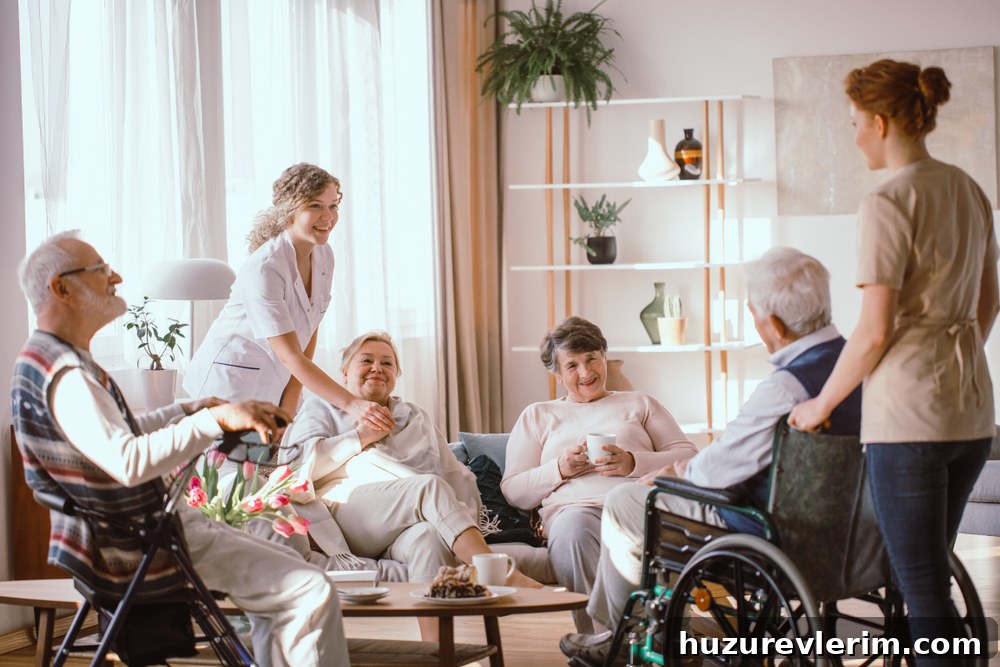
Green House homes typically house 10 to 12 residents—referred to as “elders”—each with a private bedroom and bathroom. The house centers on an open kitchen, a shared living area, and common spaces designed to feel like a family home rather than a medical unit. Meals are often prepared in the house, with residents gathering around a dining table to eat together.
Meaningful life
“Meaningful life” emphasizes resident choice and engagement. Elders are active participants in daily life rather than passive recipients of care. Activities and routines unfold organically based on individual preferences instead of rigid institutional schedules.
This model supports independence and autonomy, which helps explain why studies report higher satisfaction and improvements in both quality-of-life and quality-of-care measures for Green House residents compared with traditional nursing home residents.
Empowered staff
Perhaps the most transformative element is an empowered staff. Green House communities use a flattened organizational structure in which frontline caregivers are supported by clinical professionals but have authority to make day-to-day decisions that meet residents’ needs and preferences.
Research shows Green House communities often experience lower staff turnover and that caregivers spend more direct care time per resident—sometimes 20 to 30 additional minutes per day—compared with conventional long-term care settings. By reframing caregiving as relationship-based work, the model addresses workforce challenges while improving resident experience.
A distinctive care delivery model within Green House communities
Beyond its three pillars, the Green House model stands apart in how care is delivered. Traditional long-term care often organizes services around departments, task assignments, and efficiency metrics, with segmented roles and centralized schedules. Residents may have limited say in daily routines like wake times, meals, and bathing.
In a Green House home, care is organized differently. Caregivers—called Shahbazim, a term derived from an ancient Persian word meaning “king’s falcon”—are typically certified nurse aides trained as universal workers. Shahbazim provide personal care, prepare meals, and manage household routines, creating continuity and fostering deeper relationships with elders.
Instead of rotating staff who briefly interact with many residents, the Green House model emphasizes consistent teams, which creates a rhythm of life that resembles a family home. Elders choose when to wake up; meals are shared around a communal table; activities and conversations occur naturally throughout the day. Studies indicate care quality in Green House homes is comparable to or better than that in traditional long-term care settings.
Benefits compared to traditional long-term care
Families often notice the difference immediately. Rather than encountering long sterile corridors and nursing stations, they step into an inviting living room, smell home-cooked food, and sense belonging. Research supports that these small-home environments can lead to improved outcomes.
Studies show reductions in hospital readmissions and certain adverse clinical events among Green House residents when compared with average nursing home units. During the COVID-19 pandemic, small-home models, including Green House homes, often reported lower infection and mortality rates than larger facilities, highlighting the advantages of smaller scale and consistent staffing.
Equally important are the less tangible benefits. Residents frequently report greater dignity and control. Families describe clearer communication and stronger relationships with staff. Shahbazim caregivers often report higher job satisfaction, finding their roles more holistic and meaningful.
For older adults and families making care decisions, these differences matter: where and how someone lives affects not only health but also quality of life and sense of identity.
The Green House model and continuing care retirement communities
Continuing care retirement communities (CCRCs), also called life plan communities, increasingly incorporate Green House principles into assisted living, memory care, and skilled nursing programs. This allows residents to transition from independent living into a small-home environment when they need higher levels of care.
CCRCs that add Green House cottages or small-home neighborhoods offer skilled nursing in a home-like setting while staying connected to the campus continuum of care. This approach lets residents move from independent living into another “home” on the same campus, preserving familiarity and dignity.
For CCRCs, adopting Green House concepts can strengthen mission alignment and consumer appeal. Prospective residents and families should ask providers how Green House principles are implemented in practice.
Redefining ‘person-centered care’
While the industry increasingly uses terms like “person-centered care” and “culture change,” those phrases sometimes remain aspirational. The Green House Project puts person-directed care into practice by redesigning staffing models, decentralizing authority, and reshaping physical space, shifting the emphasis from institutional efficiency to relational depth.
This model recognizes that aging does not diminish personhood. It affirms older adults’ agency over daily routines, relationships, and choices—even when they require assisted living, memory care, or skilled nursing.
As the population ages and consumer expectations rise, the industry must move beyond incremental tweaks to embrace structural reimagining. The Green House model shows that compassionate, relationship-centered care can be operationally and financially viable.
Rethinking the future of senior living
The Green House Project challenges assumptions across the senior living field. If small-scale, relationship-centered homes produce better outcomes and higher satisfaction for residents and staff, accelerating their adoption makes sense. If empowered caregiving teams improve care and retention, hierarchical staffing models warrant reconsideration.
Workforce shortages and demographic pressures demand innovation. Policymakers, investors, and consumers increasingly expect transparent, humane care. In this context, the Green House model offers a practical blueprint for the future.
The future of aging will be shaped not only by medical advances but by the welcoming environments and meaningful relationships we create. The Green House Project emphasizes that dignity, autonomy, and connection are essential in later life. The question for the industry is whether we will reimagine long-term care as a home to be lived in rather than a facility to be managed.