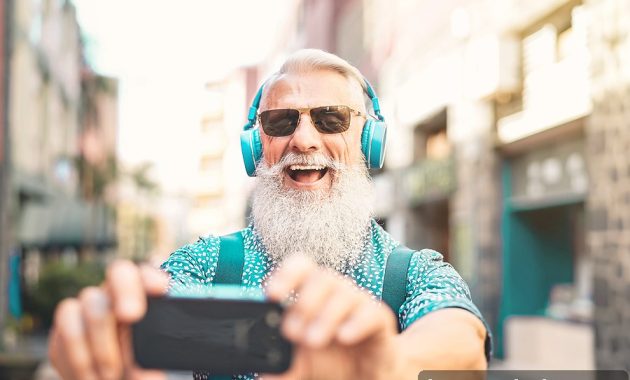
You’ve likely heard the saying, “You’re only as old as you feel.” Growing research supports that idea: people’s subjective age — how old they feel inside — often differs markedly from their chronological age. Several studies have explored that gap and revealed consistent patterns with practical implications.
The gap between chronological and subjective age
A 2009 Pew Research Center Social and Demographic Trends survey of 2,969 Americans, ages 18 and up, examined expectations about aging alongside older adults’ lived experiences. When asked how old they felt, many respondents reported feeling younger than their actual age. Younger adults (18–29) were split: roughly half felt their chronological age and about a quarter felt older. In contrast, 60 percent of adults 65 and older said they felt younger than their age, while 32 percent felt exactly their age and only 3 percent felt older.
Image credit: Pew Research Center
The Pew findings indicate the gap between chronological age and subjective age tends to widen as people grow older. Nearly half of respondents aged 50 and older said they felt at least 10 years younger than their chronological age. Among those aged 65 to 74, one third said they felt 10 to 19 years younger, and one in six reported feeling 20 or more years younger than their actual age.
Is age just a number?
A 2008 Norwegian study followed 2,471 people aged 40 to 79, measuring subjective age perception (SAP) at the start and again five years later. Most participants felt younger than their chronological age, with the effect growing stronger among older participants. For those aged 70 to 79, good mental and physical health predicted a younger subjective age.
Similarly, a 2019 study published in the International Journal of Aging Research surveyed Canadians and Americans aged 65 to 90 (average age 73) and asked how old they felt. Despite many participants having multiple health conditions, the average subjective age reported was just 51 — more than 20 years younger than chronological age. Some individuals reported feeling as young as 17, and only 8 percent felt the same age as their actual age. These findings suggest that subjective youthfulness can persist even in the presence of chronic health issues.
Today’s older people are “younger”
Contemporary seniors also tend to be healthier and more capable than previous generations at the same chronological ages. A 30-year Finnish study compared two cohorts assessed at ages 75 and 80: one born in 1910–1914 and a later one born in the late 1930s and early 1940s. The later cohort performed substantially better on several measures:
- Walking speed that was 0.2 to 0.4 meters per second faster.
- Grip strength 5 to 25 percent higher.
- Knee extension strength 20 to 47 percent greater.
- Better verbal fluency, reasoning, and working memory.
Overall, the more recent cohort demonstrated markedly higher functional capacity, indicating that people who are currently 75 and 80 tend to live longer with better physical and cognitive functioning than earlier generations.
Creating more tailored messaging
Recognizing that many older adults feel younger than their chronological age matters for healthcare, policy, and marketing. If someone identifies as “young at heart,” they may dismiss age-based medical guidance like preventive screenings, believing those recommendations are for “old people.” That mindset can contribute to missed preventive care and avoidable health problems.
For organizations serving older adults, awareness of this subjective-age gap suggests changes in language and branding. Terms like “senior” can feel exclusionary to people who don’t identify with that label. Instead, messaging that emphasizes activity, independence, vitality, or feeling “young inside” may better resonate with many older adults and encourage engagement with services, programs, and health guidance.