
Last week I had the pleasure of visiting Christwood retirement community to speak at a marketing event. Christwood is a continuing care retirement community (CCRC), also known as a life plan community, located about 45 minutes from New Orleans just across Lake Pontchartrain.
Marketing director Elizabeth Jackson, who has worked at Christwood for about six years, invited me to breakfast the morning of the event and then gave me a 15-minute tour of the campus. Because my recent posts have explored the future of CCRCs, I want to share several observations from my visit that reflect emerging trends in senior living design and lifestyle.
A unique atmosphere
The first thing I noticed about Christwood was that it didn’t feel like many other CCRCs I’ve visited. The architecture, interior details, and overall layout give the community a distinct character. That difference stood out immediately and was refreshing — too many CCRCs lean toward a uniform, institutional look, and uniqueness often gets lost.
People and community culture ultimately give any CCRC its identity, but physical design matters as well. Distinctive spaces make a community feel more like home and less like a standard facility. Imagine house-hunting where every option looked the same; that lack of variety would be uninspiring. The same principle applies to retirement communities.
Comprehensive wellness center
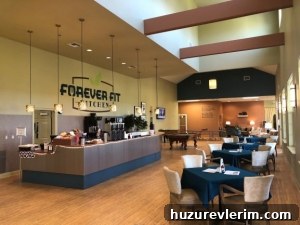
One of the features that sets Christwood apart is a large, well-used wellness center. The dining area where Elizabeth and I ate breakfast sits within this broader wellness complex and has a casual café vibe rather than a formal dining room. The wellness center includes a check-in area for towels, a large indoor pool, a fitness room that doubles as a pickleball court, a spa, and other services. What impressed me most was how many residents were actively using those spaces, indicating strong engagement with wellness and social programs.
Casual, cozy spaces
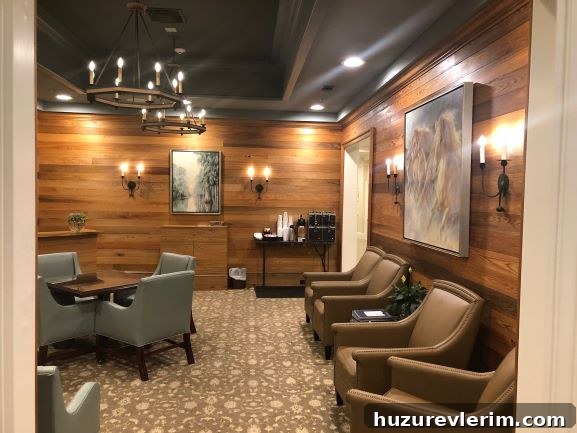
On the tour Elizabeth showed me a small room near the lobby with warm wood paneling and soft lighting that created a cozy atmosphere. This space offers coffee throughout the day and becomes a wine bar in the evenings, which is a popular draw. Rooms like this — intimate, well-appointed, and flexible — contribute to a welcoming, non-institutional feel.
Dining options
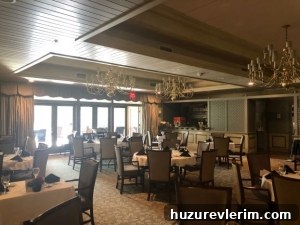
Many CCRCs offer a range of dining venues: a more formal main dining room and casual cafés or pubs for quick meals. Christwood’s formal dining room, however, feels more like a neighborhood restaurant or private club than a retirement facility. Warm paint tones, a walk-up bar, and a patio create a relaxed, comfortable dining experience. The executive director’s goal was clear: avoid an institutional atmosphere. Walking through the community, that intention was obvious — the spaces invite residents and guests to linger and socialize.
Suite-style apartment layout
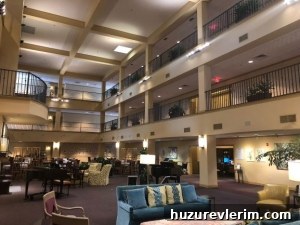
One of the newer independent living buildings truly stood out. Instead of long corridors lined with apartment doors, units face inward toward a shared common space — a layout more reminiscent of an Embassy Suites hotel or a college residence hall. That central space is used for regular functions, art shows, and gatherings, and local artwork decorates the walls. A small café at the far end encourages casual interaction. This inward-facing design fosters spontaneous socializing and community connection in ways that traditional corridor layouts often do not.
An exceptional CCRC design and an innovative community
Having visited many life plan communities, I can say Christwood demonstrates how creative design and thoughtful amenities can make a CCRC feel less institutional and more like a vibrant neighborhood. The community’s combination of distinctive architecture, active wellness programming, diverse dining options, and inward-facing residential layouts offers a compelling model for future developments.
Developers and designers are exploring new directions for CCRCs, and I’m excited to see how the market evolves over the next five to ten years as communities prioritize individuality, wellness, and social connection in their designs.