
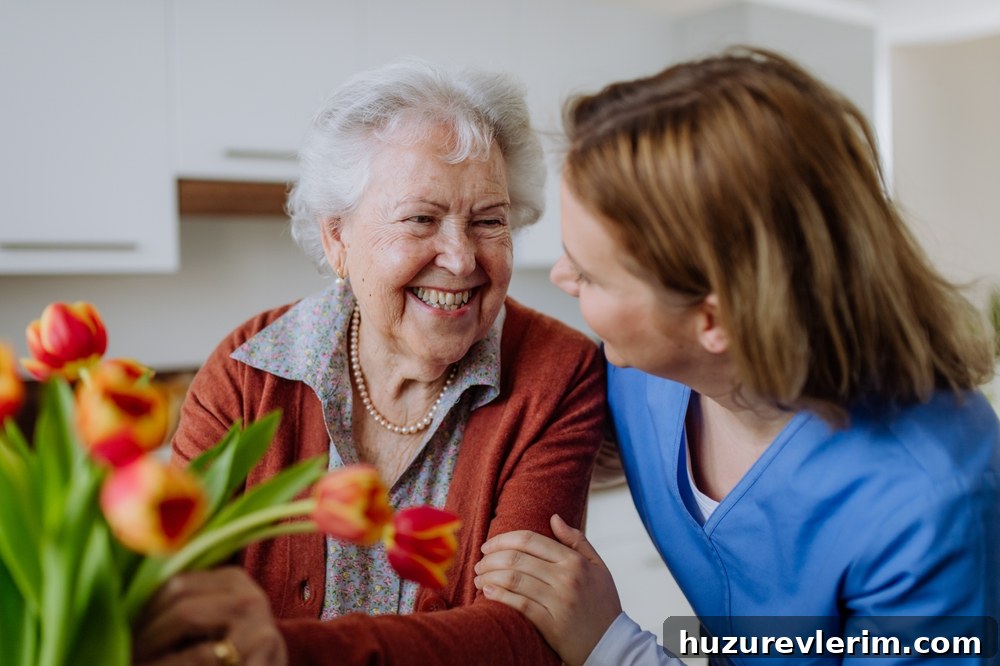
While research shows up to 90% of older adults want to remain in their own homes as they age, “aging in place” can create challenges for seniors and their families. That is why one of the most significant innovations in senior living over recent decades has been the continuing care at home (CCAH) model.
CCAH offers a compelling alternative to traditional retirement communities, assisted living, and nursing homes. By enabling older adults to receive needed care and support in their own homes, CCAH addresses many of the physical, emotional, and social challenges of aging while allowing people to stay in the homes they cherish. For many, this model represents a best-of-both-worlds solution.
What is continuing care at home?
In prior posts we explain continuing care retirement communities (CCRCs), also called life plan communities. CCRCs provide a continuum of care on a single campus — from independent living through assisted living and memory care, up to skilled nursing. Residents typically pay an entry fee plus a monthly service fee in exchange for housing, meals, amenities, activities, and access to escalating levels of care.
Many older adults, however, prefer to stay in their own homes for reasons of independence, comfort, and cost. While staying at home is not always less expensive than moving to a CCRC, the desire to remain in a familiar setting motivates many people’s decisions. A continuing care at home program — sometimes described as a “CCRC without walls” — combines the comfort of home with access to the services and protections associated with a CCRC.
>> Related: Crunch the Numbers: Aging at Home vs. Moving to a CCRC
How continuing care at home programs work
CCAH programs are typically administered by CCRCs or other senior care providers. Like a standard CCRC contract, many CCAH agreements require a one-time membership fee and a recurring monthly service fee, though the overall cost is often lower than moving onto a CCRC campus—particularly for homeowners.
Depending on the contract, membership may include access to campus amenities such as pools, fitness centers, programs, and dining. In other cases, the agreement functions more like a long-term care policy, primarily providing access to care services when they are needed.
Members may also receive priority access to the community’s full continuum of care. When assistance can safely be delivered at home, caregivers—such as therapists, aides, and nurses—are dispatched to the member’s residence. If more complex, in-patient care becomes necessary, many programs cover the costs of transition to on-campus care.
In short, CCAH eliminates the requirement to live on the CCRC campus while offering many of the benefits of campus-based life. Communities offering CCAH have extended their services beyond their physical facilities to support members in their own homes.
>> Related: “…but I love my home”: Is Staying in Your House the Right Move?
A closer look at what a CCAH contract/membership buys
Offerings vary by community, but CCAH memberships commonly include access to:
- Community amenities and events: Use of wellness facilities and group programs, on-campus social and educational events, and dining privileges.
- Dedicated care navigator: A professional who oversees regular needs assessments, medical monitoring, and medication management.
- Personal care assistance: Help with activities of daily living such as bathing, dressing, grooming, and meal preparation.
- Home health care: Skilled medical services including nursing visits, rehabilitation therapies, and wound care.
- Other support services: Transportation assistance and companionship services.
Unlike traditional home care, CCAH programs typically include a long-term plan that adapts as needs change. A core benefit is the assurance that members will continue to receive appropriate services at home or transition smoothly to on-campus care when more complex support is required.
Some example CCAH programs
CCAH offerings are expanding nationwide, and each program has unique services, eligibility rules, and pricing. It’s important to review the specifics of any program before joining.
Springpoint Choice
Springpoint operates nonprofit CCRCs and affordable senior housing across the Mid-Atlantic and offers Springpoint Choice, a membership program positioned as an alternative or supplement to long-term care insurance. The program gives members access to on-campus social and wellness amenities while ensuring in-home care delivery when needed. If a member requires care that cannot be provided at home, Springpoint’s care navigator arranges and covers the transition into an appropriate Springpoint community for rehabilitation, memory care, assisted living, or skilled nursing.
Kendal at Home
Kendal at Home is another membership-based CCAH program run by Kendal, a nonprofit senior care provider operating in multiple states. Kendal at Home functions similarly to a long-term care policy and provides members with 24/7 access to a care coordinator who assesses needs, arranges services, and even follows up during hospital stays to manage outpatient care. Unlike some programs, Kendal at Home does not offer access to Kendal communities’ amenities, but it supports member-organized interest groups for social engagement. When long-term facility care is required, the program can cover the cost if the chosen facility meets plan guidelines, and benefits are portable throughout the continental United States.
>> Related: Home- and Community-Based Services: An Increasingly Popular Care Option
The benefits of continuing care at home
CCAH is not the right choice for everyone, but it offers multiple benefits for older adults, their families, and the broader health system:
Independence and comfort
CCAH enables older adults to remain in the familiarity and comfort of their homes for as long as possible.
Personalized care
Programs deliver individualized care plans that address medical, emotional, and social needs, ensuring the right level of care at the right time.
Improved quality of life for family caregivers
Families can stay more connected to loved ones at home while benefitting from professional support that reduces caregiver stress and burnout.
Cost-effectiveness
In many cases, CCAH can be more affordable than full-time assisted living or nursing home care by eliminating in-patient room and board and offering predictable pricing.
Better health outcomes
Participants often experience fewer hospital readmissions and better overall outcomes thanks to personalized care delivered in a familiar environment.
Reduced burden on healthcare systems
CCAH can ease pressure on hospitals and long-term care facilities by shifting appropriate care to home settings.
>> Related: The Unexpected Costs of Caring for an Aging Parent
CCAH: A best-of-both-worlds senior living solution
Continuing care at home offers a forward-looking approach for an aging population that prefers to remain at home. By combining a flexible range of services with the ability to adapt to changing health needs, CCAH helps older adults maintain dignity, independence, and comfort while giving families peace of mind.
As demand for aging-in-place options grows, CCAH programs are likely to expand. For many older adults and their families, this approach provides a compassionate, practical way to manage the challenges of aging while preserving quality of life.
Originally posted May 19, 2016; updated Feb. 24, 2025