
With many older adults living on fixed incomes, rising housing costs can be especially painful. A recent report forecasts rent increases that will outpace inflation in many parts of the U.S., averaging roughly 3 to 5 percent nationwide.
Alongside higher rents, the past two winters brought record-low temperatures and spikes in natural gas and heating oil prices. Many seniors experienced sticker shock when opening their energy bills and worried about covering the added expense.
Fortunately, there is some encouraging news: the U.S. Energy Information Administration’s Short-Term Energy Outlook projected lower heating costs for the 2015–2016 winter (October through March), driven in part by milder temperatures and reduced fuel prices.
Quick tips to lower heating bills this winter
With rent rising but heating costs expected to be lower, older Americans can still benefit from practical steps to trim their energy use and ease monthly expenses. The following strategies are straightforward, affordable, and effective at reducing energy consumption during the cold months.
Lighting
Swapping the five most frequently used light bulbs in your home for energy-efficient models can save roughly $75 per year. The main residential options include:
- Halogen incandescent bulbs — More efficient than traditional incandescents, halogens use less energy and last up to three times longer. They come in many shapes and sizes and work with dimmer switches.
- Compact fluorescent lamps (CFLs) — CFLs last about ten times longer and use around 75 percent less energy than standard incandescents. Although they cost more upfront, they typically pay for themselves in under a year through energy savings.
- Light emitting diodes (LEDs) — LEDs use only about 20–25 percent of the energy of a traditional incandescent and can last up to 25 times longer, making them the most efficient residential lighting choice. They are available in a range of colors, often provide comparable light quality to incandescents, and many models are dimmable.
Additional lighting tips:
- Keep blinds, curtains, or shades open during daylight hours to make use of natural light instead of turning on lamps.
- Replace outdoor incandescent bulbs with CFLs or LEDs, since exterior lights tend to run for long periods.
- Swap traditional incandescent holiday lights for LEDs. For example, running 125 standard incandescent decorative lights for 480 hours might cost about $25, while an equivalent LED display could cost only a fraction of that.
Heating and cooling
Heating and cooling systems typically account for a large portion of a household’s utility bills—often nearly half. With basic maintenance and small behavioral changes, you can reduce these costs by about 30 percent.
- Wear warm socks and slippers indoors. Because heat rises, floors can feel colder than the rest of the room.
- Open blinds and curtains on sunny days, especially on south-facing windows, to let sunlight naturally warm your home.
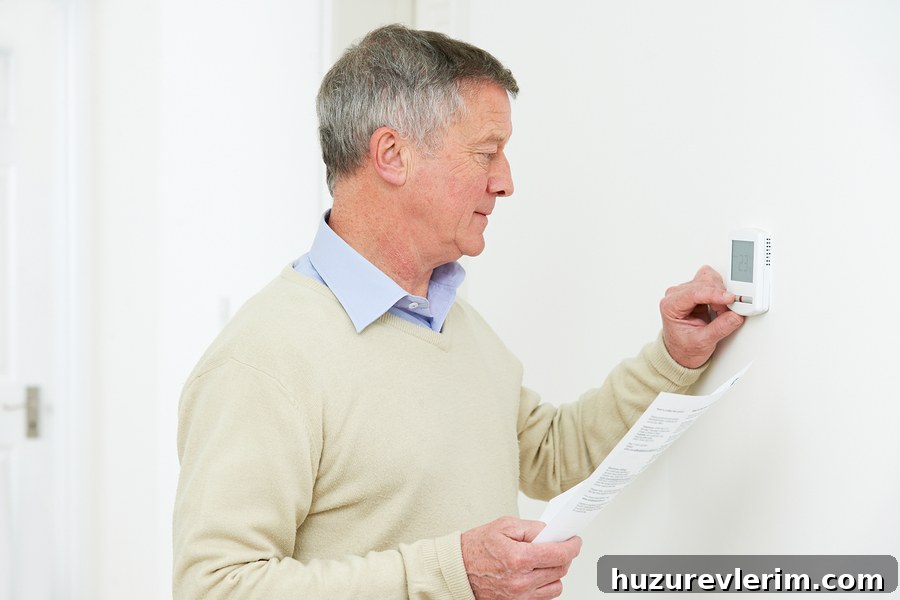
- Use a programmable thermostat: set a comfortable-but-lower temperature during the day, and reduce it further at night or when you’re away. Adding an extra blanket to the bed can help keep you warm at night.
- Clean or replace furnace filters as recommended—often monthly—to keep the system running efficiently. Keep warm-air registers, baseboard heaters, and radiators free of dust and obstacles like furniture, rugs, or curtains.
- If your home uses radiators, bleed trapped air from the system once or twice during the season; consult a professional if you’re unsure how to do this safely.
- Fit fireplaces with tightly closing glass doors to prevent warm indoor air from escaping up the chimney when the fireplace is not in use. When the fireplace is burning, cracking a nearby window slightly can help maintain better airflow and reduce warm air loss up the chimney.
Windows
Poorly insulated windows can let up to 25 percent of a home’s heat escape. Several fixes can significantly reduce that heat loss.
- If you have single-pane windows, consider replacing them over time with double-pane units that feature high-performance glass. In cold climates, opt for gas-filled panes and low-emissivity (low-e) coatings to limit heat transfer.
- Apply heavy-duty clear plastic sheeting to the interior of window frames to block drafts. The same approach can be used on unused patio doors.
- Close curtains and shades at night to minimize heat loss, and open them during sunny hours to capture passive solar warmth.
Worth the time
For seniors on tight budgets, winter energy costs can be a significant burden. Taking a few intentional steps—upgrading lighting, maintaining heating systems, and improving window insulation—can make a noticeable difference in monthly bills. If you need help implementing these changes, a local handyman or qualified service professional can assist with installations and maintenance.