Ready or not, here come the baby boomers. In the years ahead, the most successful continuing care retirement communities (CCRCs), also called life plan communities, will be those that embrace new and creative ways to support the lifestyle preferences of this next generation of retirees. Over the coming weeks and months, I will explore several trends I expect to shape CCRCs—features communities should consider to attract and retain these future residents.
In last week’s blog post, I described how CCRCs are updating design features to appeal to baby boomers. Wellness-focused amenities, expanded outdoor activity spaces, and flexible rooms that serve multiple purposes are among the design elements progressive communities are adopting.
Another key area where the industry must evolve to meet baby boomers’ expectations is technology.
>> Related: The CCRC of the Future: Community Design
The future of CCRC technology
Recent data show a substantial rise in senior internet use: a large share of Americans age 65 and older are now online, and most have home broadband. Those percentages are likely even greater among CCRC residents and prospects. As a result, technology is being introduced into CCRCs and other retirement communities at a growing pace. Incoming baby boomers expect connectivity upon move-in, and many current residents are more tech-savvy than previous generations.
Below are several ways forward-thinking CCRCs and retirement communities are using technology to meet the needs of current residents and this new wave of retirees.
>> Related: Seniors and Technology – Embracing the Digital Age
Beyond Wi-Fi
Seniors increasingly get news online, use social media, and connect with family through video calls. Consequently, demand for reliable Wi-Fi in private residences and public spaces has risen. Today, Wi-Fi is often viewed as a baseline expectation—comparable to air conditioning in a new car.
But residents’ technology needs will extend beyond simple internet access. Communities will use connectivity to offer online classes and training, host virtual events, and provide digital tools for ordering meals and requesting services. Smartphone apps and online forms simplify daily tasks and make services more accessible.
Reliable Wi-Fi also enables less-mobile residents to participate in virtual social events, play online games, and join group activities by voice or video. These interactions stimulate cognitive function and support mental well-being by reducing isolation and helping residents maintain connections with friends and family who live far away.
>> Related: Game On: Can Brain Games Improve Your Memory?
Virtual reality
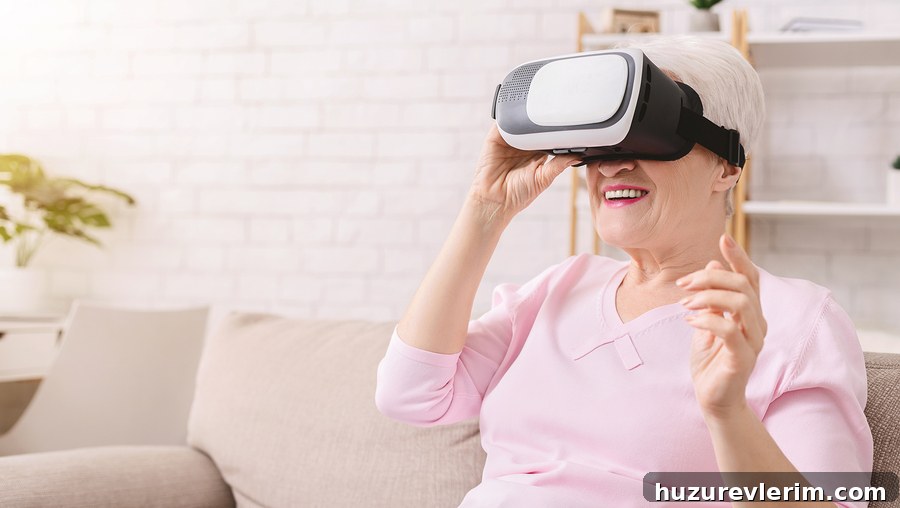
Virtual reality (VR) and interactive video applications are becoming more affordable and capable. VR can transport residents to meaningful places—a childhood neighborhood, a favorite travel destination, or faraway scenery—offering powerful reminiscence therapy and conversation starters. It also enables less-mobile residents to feel present at family events or join virtual outings with loved ones.
Beyond enjoyment, VR can positively affect emotional and cognitive health. It offers promising solutions for addressing isolation, enhancing memory care activities, and supporting non-pharmacological pain management strategies.
Assistive devices
Technologically delivered services and assistive devices are increasingly common in senior living. Smart home technologies and remote monitoring can enhance safety and independence. For example, wearable Bluetooth sensors can track movement and alert staff if patterns suggest a fall or prolonged inactivity. Many smartwatches now include automatic fall detection and emergency summoning features.
Privacy concerns exist, and acceptance varies by individual. Some residents worry about being tracked, while others welcome monitoring when it provides safety and quick help. To address these concerns, newer systems can monitor movement passively via Wi-Fi signals rather than wearable devices. These solutions detect atypical activity levels in an apartment and notify staff when intervention may be required, offering a less intrusive option.
>> Related: Can Assistive Tech Reduce Your Senior Home Care Worries?
Looking ahead
Many of these technological advances are already in use at forward-thinking CCRCs. The next generation of retirees expects connectivity and innovation, and those demands will encourage communities to expand on-campus technology offerings.
If you are evaluating a CCRC or another retirement community, ask about current Wi-Fi coverage, safety-related technologies, and planned innovations. How a community answers these questions can reveal how it prioritizes emerging high-tech solutions and whether it is prepared to meet residents’ evolving needs.