
The University of Michigan’s Institute for Healthcare Policy and Innovation carried out the National Poll on Healthy Aging (NPHA) in January 2023, surveying 2,563 people aged 50 to 80 about their social connections and experiences of isolation. The results show that many older adults—especially Baby Boomers living alone, often called “soloagers”—continue to struggle with persistent loneliness after the pandemic. One promising, practical response to this problem has emerged in an unexpected place: the grocery store.
Loneliness continues post-pandemic
The NPHA has collected comparable data across several years, asking the same questions in October 2018, June 2020, January 2021, January 2022, and January 2023. Tracking these responses over time reveals notable changes in feelings of isolation and companionship among older adults before, during, and after the pandemic.
Key findings from the January 2023 poll include:
- About one in three respondents (34%) said they sometimes or often feel isolated from others. That share fell from the June 2020 peak of 56% during the height of the pandemic, but it is higher than in October 2018 when 27% reported such feelings.
- Over one-third (37%) reported lacking companionship over the past year. This was slightly lower than the 41% who felt this way in June 2020 but higher than the 34% who reported it in October 2018.
- One in three respondents (33%) said they have social contact with friends, neighbors, or family they don’t live with infrequently—defined as once per week or less. That is an improvement from the 46% reporting infrequent contact in June 2020, yet worse than the 28% from October 2018.
The National Poll on Healthy Aging provides more detailed findings from surveys conducted between 2018 and 2023 for those who want to explore the data further.
>> Related: Many Senior Living Residents Fared Better than Non-Residents During COVID
Shopping for solutions to senior loneliness
These results indicate that, although loneliness eased from its pandemic peak, older adults have not fully returned to pre-pandemic levels of social connection. Many retirees prefer to remain in their own homes, and for some, the independence that brings also comes with increased risk of loneliness—particularly for soloagers.
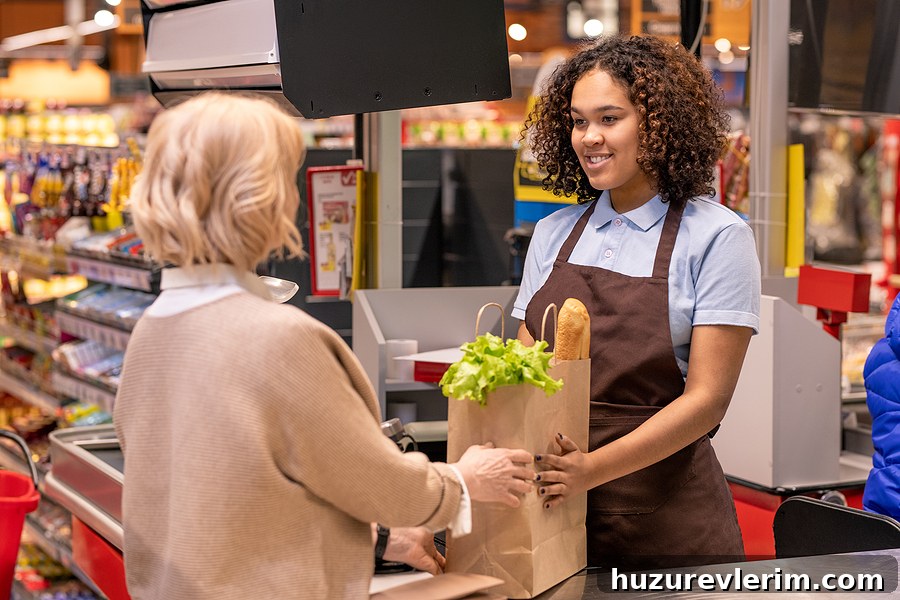
Grocery stores have become an unexpected setting for interventions that reduce isolation. Several stores in Europe and Canada have introduced designated “slow social” lanes at certain times of day to give shoppers a calmer checkout experience and the opportunity for human interaction.
The “relaxed checkout” idea was first piloted in 2017 by a Tesco store in Scotland to ease shopping for people with Alzheimer’s and other forms of dementia. In 2019, Dutch chain Jumbo launched a pilot called “Kletskassa,” or “chat checkout,” aimed at reducing loneliness among customers.
>> Related: The Key Difference Between Social Isolation & Loneliness
Slow social lanes fill a crucial need
Many shoppers rush through stores, and self-checkouts respond to that demand. But for some—particularly older adults living alone—a trip to the grocery store may be one of the few daily opportunities for face-to-face contact. Slow social lanes provide a dedicated space for customers who want to take more time at checkout and engage in conversation beyond routine exchanges.
At Sobeys locations in Edmonton, Canada, designated slow social lanes let customers spend more time talking with cashiers; some conversations there last up to 15 minutes. Cashiers report a wide range of interactions, from lighthearted chats to deeply personal conversations in which customers share grief or personal struggles. These interactions underscore how meaningful a friendly conversation can be for someone lacking social contact.
>> Related: Why Socialization May Be CCRCs’ Top Selling Point Post-Pandemic
Seeking novel solutions to prevent loneliness
Introducing slow social lanes is a practical, community-oriented step toward addressing loneliness among older adults, but it is only one piece of a broader strategy. If most retirees intend to age in place, society must expand support for their emotional and social wellbeing. That means creatively fostering opportunities for interpersonal connection—through community programs, public spaces, and everyday venues like grocery stores—so older adults can maintain meaningful relationships while preserving independence.