
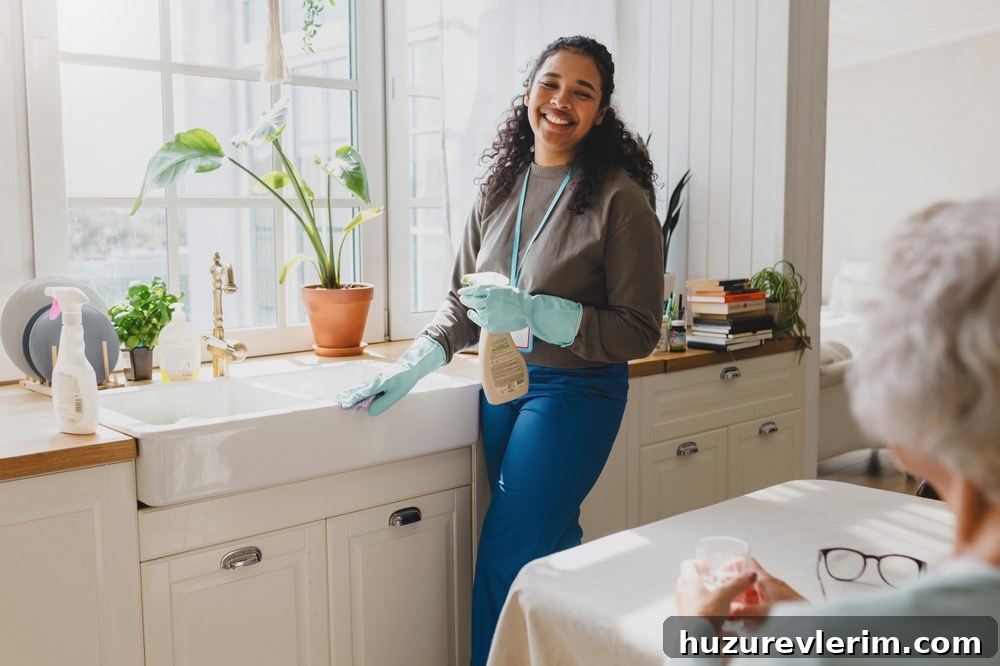
Research increasingly confirms that social connection and a sense of community strongly influence well-being and longevity. Choosing to live in a retirement community offers convenient access to a built-in social network of peers and regular interaction with staff members, as well as opportunities for intergenerational engagement that enrich daily life.
The power of human connection
Staff members in retirement communities provide a wide range of services and typically represent diverse age groups and backgrounds. Some are students or early-career workers, while others have spent years in senior living. What unites them is a commitment to serving residents—helping, supporting, and caring for them on a daily basis.
For residents, employees quickly become part of everyday life and play a vital role in quality of life. Those resident-employee relationships create a close-knit network in which people teach, learn, and support one another.
Because retirement communities are service-oriented, warm relationships naturally develop. For example, a dining server who sees the same residents each evening comes to know much more than food preferences; they get to know the people behind the meals.
Like neighbors or friends, employees and residents often share life updates, medical concerns, and family news. Over time, staff members can feel like family—offering genuine care and emotional connection that go beyond routine service.
>> Related: 55-Plus Intergenerational Program Rewards Student-Employees
Questions every prospect should ask
From a management standpoint, those daily interactions mean employee satisfaction matters. How staff feel about their work affects the social environment, the quality of service, and the support residents receive.
Having worked on several retirement community sales teams, I’ve seen prospective residents ask about pricing, services, and amenities. One area that deserves more attention is the community’s workforce. Here are questions I recommend prospective residents or their families ask when evaluating a continuing care retirement community or life plan community:
- Are your employees happy? What do your employee satisfaction scores look like?
- How many employees work here, and how many have been employed longer than five years? What is the average tenure?
- How often do senior and executive leaders visit the community and engage with residents?
- How many intergenerational programs are offered each year, and how well attended are they?
- How often are residents and employees encouraged to bring their families to social events?
Note: For those evaluating care-focused settings—assisted living, memory care, or skilled nursing—also ask about staff training and credentials, staffing ratios, and the community’s ownership and management structure.
Why retirement community employee satisfaction matters
Staff are often the most consistent presence in residents’ lives. They handle food preparation and service, housekeeping, maintenance, programming, and, in care settings, direct personal support. Given the frequency and intimacy of these interactions, it’s important that employees are both well-trained and satisfied with their work.
An employee’s attitude and performance tend to reflect their job satisfaction. Residents benefit when staff take pride in their roles and feel supported by leadership. Conversely, high turnover or low morale can negatively affect daily life in the community.
>> Related: Long-Term Care Staffing Shortages Have Far-Reaching Implications
A mutually supportive bond
Many residents live in retirement communities for a decade or more, which means years of regular contact with staff who manage maintenance, dining, housekeeping, nursing, fitness, and administration. For some residents, community employees may occupy more of their yearly contact time than family members. In care situations, residents may rely heavily on staff for both practical assistance and emotional support.
One common reason staff stay at retirement communities is the meaningful relationships they build with residents. While professional, these bonds often grow personal: employees and residents share celebrations, losses, and everyday moments, supporting one another through life’s significant events.
These connections are mutually nourishing. Intergenerational friendships allow residents and employees to exchange perspectives and life lessons that enrich both parties.
>> Related: Taking A Close-Up Look at Retirement Community Guest Suites
A personal perspective on the employee-resident connection
I’ve witnessed firsthand how strong these bonds can be. Residents often got to know my family, and I learned about theirs—children, grandchildren, and siblings. Some colleagues have worked long enough to know multiple generations of the same family who chose residence in the same community.
I joined residents for ballroom dancing classes, game nights, trips, and concerts, sharing stories about treasured memories, grief, and life lessons. Those shared experiences built mutual investment: I cared deeply about residents’ well-being, and they cared about mine.
While such relationships aren’t easily measured, their impact is clear. Employees who genuinely care make a meaningful difference in the life of a community.
If you’re exploring retirement communities, ask about the staff during visits with sales and management, and speak with current residents and employees to learn about life and work there. Their firsthand perspectives can be revealing.
A retirement community is, above all, home. When choosing a community, prioritize long-term comfort and happiness. Ensuring the staff will meet your needs—with competence and warmth—can greatly enhance day-to-day life.
Newell Bowman Dickerman is myLifeSite’s customer success representative. She has more than 15 years of experience in senior living sales and marketing, including seven years as director of sales at Claridge Court, a Lifespace Community in the Kansas City area.