
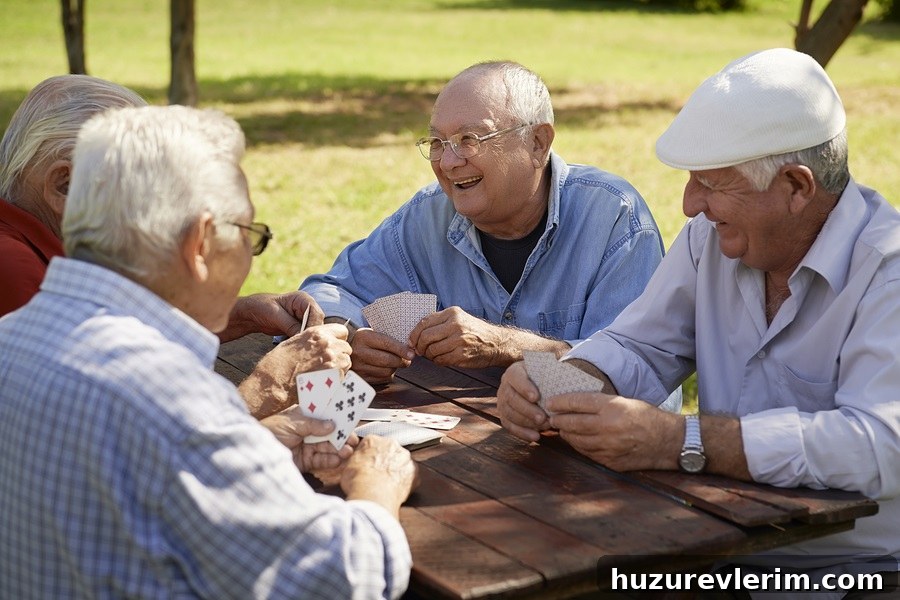
In the Broadway musical Wicked, Glinda’s upbeat number “Popular” champions being well-liked. While the song is playful, emerging research suggests social popularity and strong friendships really do matter—especially as we grow older.
It’s all about popular!
It’s not about aptitude
It’s the way you’re viewed
So it’s very shrewd to be
Very, very popular…
Like me!
Recent sociological work examining life inside a continuing care retirement community (CCRC) provides a clear example of how social networks and health intersect in later life. Markus Schafer, a sociologist who spent a year embedded in a CCRC while collaborating with researchers in gerontology, collected detailed observations and interviews about residents’ social interactions. By mapping who socialized with whom and how often, he built a picture of residents’ friendship networks.
Cliques aren’t just for teenagers
Schafer’s analysis showed that residents who were healthier tended to have larger, more reciprocal friendship circles—people who both identified each other as friends. Conversely, residents in poorer health often had smaller networks and were less frequently named as friends by others, even if they themselves considered someone a friend. This raises the familiar chicken-or-egg question: are healthier seniors more social because they can be, or are socially connected seniors healthier because of their relationships? Schafer noted that healthier residents often appeared more selective about whom they spent time with, suggesting quality as well as quantity mattered.
>> Related: The Perils of Social Isolation in Retirement
Loneliness is unhealthy for seniors
Although Schafer’s research focused on a community setting, its implications extend beyond CCRCs to older adults living in the larger community. His team found that stronger interconnectivity—when a senior’s friends also know one another—was linked to fewer instances of elder abuse. More broadly, other studies have shown that loneliness and infrequent social interaction are associated with worse health outcomes and even shorter lifespans for older adults. A major study from University College London reported that loneliness and limited social contact independently increased mortality risk, regardless of other health factors.
>> Related: Home Alone: Is It the Best Option for Aging Adults?
Friends for life at the CCRC
Moving to a retirement community like a CCRC can increase social opportunities and daily interaction—both protective factors for health. Common features that encourage social connection include:
- Structured clubs and activity groups—book clubs, hobby meetups, fitness classes and more—offer repeated chances to meet residents with shared interests.
- Communal dining—meals provide natural settings for conversation and help residents form bonds over shared routines.
- Organized events—community life coordinators schedule social, cultural, and recreational activities that make it easy to mix and meet new people.
- Shared life stage—many residents have similar backgrounds, interests, or family experiences, which makes it easier to strike up and sustain friendships, much like on a college campus.
Beyond increased social contact, CCRCs provide progressive levels of care as needs change. That continuity reduces the risk that a decline in mobility or health will cause a resident to become isolated. Close proximity to friends and family—plus on-site services—helps ensure frequent visits and attentive support during transitions in health.
Support from the community
The proverb “it takes a village” applies to aging as well: a supportive network of friends, neighbors, family, and care staff helps older adults remain safe, engaged, and healthy. If you’re exploring options for retirement living, consider how community design and social opportunities can support long-term wellbeing.