By Karen Shane
The following story is part of a joint project between myLifeSite and Senior Correspondent where we ask people to report on their senior living decision process.
John and I married on the plains of Nebraska 59 years ago at age 18. From that moment, we embraced a life of constant movement and discovery that neither of us wanted to give up.
While many of our peers were raising families, we chose a different path and packed decades of bold experiences into our marriage, including:
- Camping on a glacier in Alaska while keeping watch for polar bears.
- Picking up a new Harley at the Pennsylvania factory and riding home to Albuquerque via Canada.
- Turning back to retrace our rapidly disappearing tracks in a blizzard on Black Bear Pass in the Colorado Rockies.
- Dodging thunderstorms as John piloted us toward the Bahamas.
All of these were enriching adventures—perhaps made rosier in hindsight—but no less meaningful for that.
After retiring from Sandia National Laboratories in Albuquerque in 1994, our travels intensified and became our defining lifestyle. We learned early on that home was wherever we were together, and retirement launched a two-decade odyssey on the road.
John liked to joke about his short attention span and, because we could afford only one “toy” at a time, we often sold our previous base before moving on to the next adventure.
Our first major challenge as full-time travelers was a 42-foot Kadey-Krogen trawler. For two desert-born wanderers, there was something magical about navigating the Intracoastal Waterway and watching coastal range markers line up for the first time.
When we found the seascapes a bit repetitive, we traded the boat after a year for a 34-foot Airstream travel trailer towed by our one-ton Dodge dually diesel. With the seasons we followed comfortable weather from Nova Scotia to the Yucatán, and at one point even rode our rigs on flatcars through Mexico’s Copper Canyon.
We paused for six weeks to explore South Africa in a compact, deluxe camper van with right-hand drive, testing John’s skill shifting with his left hand on their roads.
By spring 1999 we were living in England on a 20-ton narrowboat, 6 feet 10 inches wide and 57 feet long, cruising more than 2,000 miles of historic canals that had powered the Industrial Revolution. Our narrowboat years included dramatic moments—like losing hydraulic steering on the River Thames during an international naval conference—and we called that floating life home for more than two years.
Back in the U.S., our next rig was a 34-foot Foretravel motorcoach with a Jeep Cherokee trailing behind. When people asked if constant travel grew tiring, I would ask, “What’s not to like?” Waking up somewhere new every morning kept us curious and excited.
John’s vision and resourcefulness created a life in which we truly shared every day. Our nomadic lifestyle left no room for boredom, repetition, or confinement; with each new chapter we grew more confident in tackling fresh challenges.
Our path toward senior living began in 1996 while traveling in the Airstream. We met another couple at an RV park in Alpine, Texas, and invited them for lasagna—homemade pasta and all. Over dinner our new friends raised a question that stopped us short: what would happen if one of us became incapacitated?
“We’ll take care of each other,” we replied at first. They challenged that notion, asking plainly how it would work in practice. At two years into retirement we were reluctant to face that possibility, so we avoided the topic.
Years later, we met the same couple again at an RV park in Richfield, Utah. This time we exchanged details and stayed in touch. Their familiarity with continuing care retirement communities (CCRCs)—one of their mothers had lived in one—sparked our curiosity. John even joked on parting, “If you find the right one, buy two!”
Fifteen years after that first encounter, the four of us decided to tour CCRCs in the Greater Phoenix area, where we wintered. From the start, Royal Oaks, a nonprofit community in Sun City, stood out and eventually became our choice after careful evaluation.
Financial stability topped our checklist. Very few of the 1,800-plus retirement communities nationwide can claim an “A” rating from Fitch—Royal Oaks has maintained that rating for more than a decade. That fiscal strength gave us confidence that the community would be there regardless of changing resident needs.
Beyond finances, we considered health care, a proven management team, dining and social venues, educational opportunities, and the overall lifestyle offered. To us, lifestyle tied all those pieces together—the daily life we wanted to lead in our later years.
In January 2018 Royal Oaks unveiled the first phase of a 20-year master plan: an expansion that includes a 60-suite care center complementing an award-winning memory care facility and a prized fitness center. The fitness program offers classes from balance and chair yoga to osteoporosis exercises and lively water volleyball.
While our friends moved in immediately, John and I chose to secure a small apartment—still more than twice the size of most of our on-the-road homes—which we filled with essentials, a Julia Child–style pegboard for my cooking, and boxes of books from two decades in storage. We made the bed and treated the place as our emergency landing pad: we planned to travel for another ten years and return if needed. Aggressive prostate cancer shortened that timeline, and we were back in less than two years. That bed was ready when we arrived.
Now, five years after settling at Royal Oaks, we lead an active, slightly less frenetic life. Our apartment serves as a comfortable home base for road trips. We’ve revisited grand historic venues we missed earlier—stays at the Hotel Del on Coronado Island, El Tovar Lodge at the Grand Canyon, and cabins on Mormon Row in Teton National Park have renewed our love of travel without the strain of long-term nomadism.
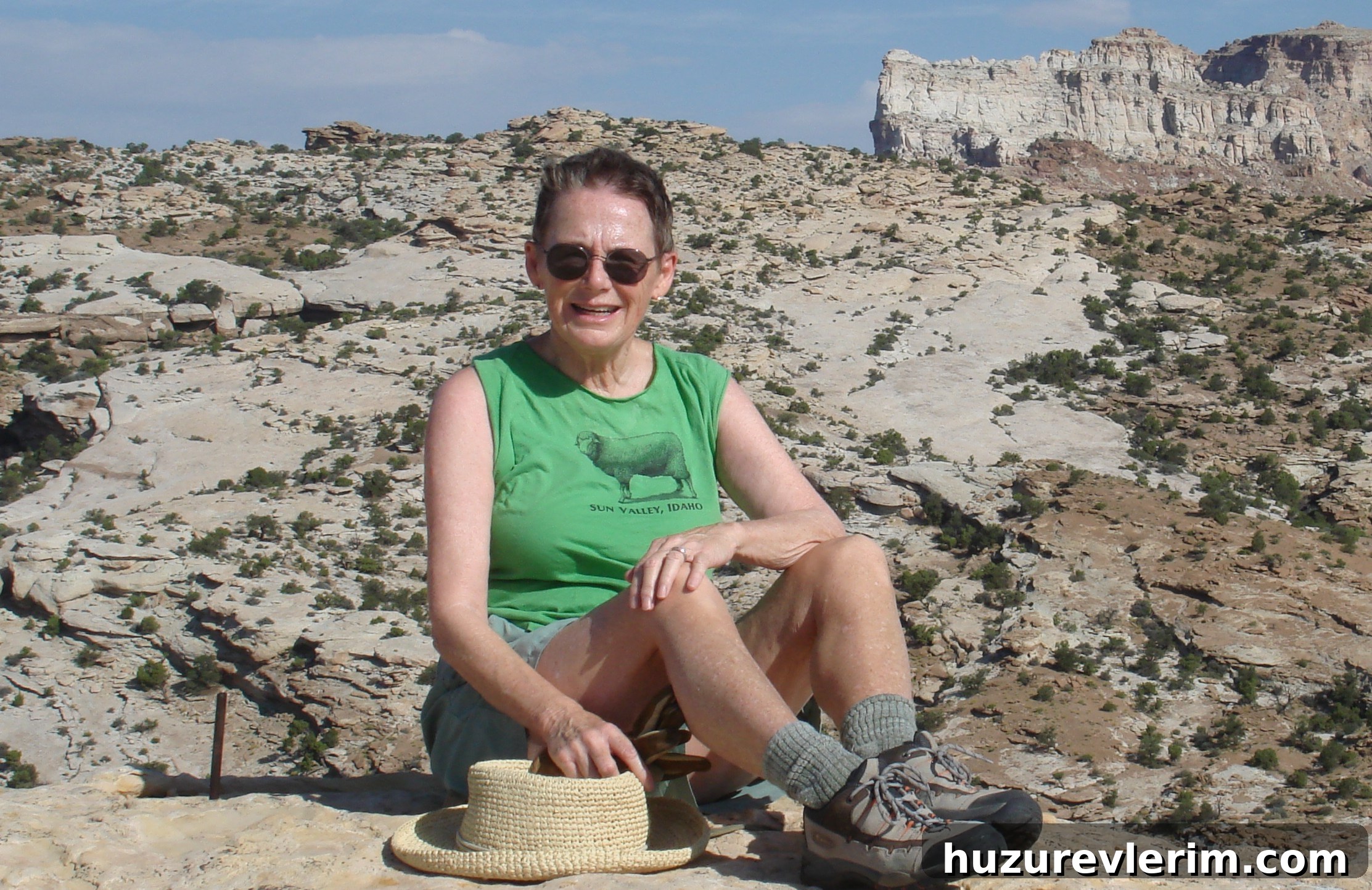
The spirit of adventure remains. Less than five months after John’s major surgery, we completed a 9-mile scramble in Little Wild Horse–Bell Canyon in Utah. Last fall, at 77, we impulsively tackled Hanging Lake in the Colorado Rockies—a steep trail that climbs 1,000 feet in a mile and winds over a maze of massive boulders. I declined John’s suggestion to send a triumph photo to my orthopedic surgeon at the Mayo Clinic, who had replaced my hip four years earlier.
Our choice of Royal Oaks continues to feel right. Whether enjoying meals on our private balcony or taking turnkey departures on the road, we now ask ourselves, “Why would we have ever wanted the hassles of a house?”
The common refrain among residents—“Aren’t we lucky to be here?”—is heartfelt.
It’s the lifestyle.
About the writer
Karen Shane retired as manager of Community Relations at Sandia National Laboratories in Albuquerque in 1994, where she founded and directed the employee volunteer program and created the Community Focus lecture series. Her honors and positions have included membership on the Governor’s Task Force on Voluntarism; chairing the Albuquerque Consortium for City-Wide Volunteer Recognition; serving as president of the Greater Albuquerque Volunteer Association; chairing the Allocation Panel for the United Way of Greater Albuquerque; participating on the AT&T Public Relations Advisory Council; chairing a “Skillsbank” roundtable for the National Council on Corporate Voluntarism; and serving on committees for the University of New Mexico Centennial, Albuquerque Historic Preservation and Conservation Review, and The Nature Conservancy’s New Mexico Chapter Board of Trustees. She received the American Red Cross Award for Outstanding Leadership in Voluntarism. Karen and her husband live at Royal Oaks in Sun City, where she writes a monthly column about their adventures for the Acorn.