The best way to find yourself, is to lose yourself in the service of others.
— Mahatma Gandhi
Stories that show people helping others are a welcome counterpoint to negative headlines. This week I read about a creative, resident-led effort at The Village at Orchard Ridge, a continuing care retirement community in Winchester, Virginia, where seniors turned plastic grocery bags into waterproof mats for a local homeless shelter.
The group, who call themselves the Plarners (a blend of “plastic” and “yarn”), collected an impressive 31,500 plastic bags. Over several months they sorted, folded, cut and looped the bags into balls of plastic yarn, then used oversized crochet hooks to make 35 durable mats for shelter use.
>> Related: Intergenerational Programs Unite the Young and the Young-at-Heart
Neighbors helping neighbors
Many Plarners didn’t know each other before the project began, but the work created opportunities to form new friendships. Each mat measures roughly 3 by 6 feet and takes about 900 bags to make. Every mat required 25 to 30 hours from start to finish—time spent sorting, cutting, making plarn and crocheting—which gave residents plenty of chances to connect and bond. These social ties are one of the strengths of life plan communities.
Importantly, this initiative was entirely resident-driven. Residents recognized the need, devised the solution, organized the effort and split tasks to complete the project. In my experience, activities led by residents themselves tend to be the most successful and sustainable in CCRCs.
The waterproof mats also demonstrate that older adults continue to innovate. By combining their crocheting skills with a practical reuse of plastic bags, the Plarners created a clever, low-cost solution to a real problem. Projects like this help seniors maintain purpose and show how creativity and service can intersect.
>> Related: Encore Careers for Seniors: Finding Job Satisfaction…Again
Making good use of time and talent
One line from the story stands out: “the Village at Orchard Ridge has plenty of resources and people to help others.” Recognizing that CCRCs have both time and talent to offer is important. Communities of older adults are often an untapped resource for civic good.
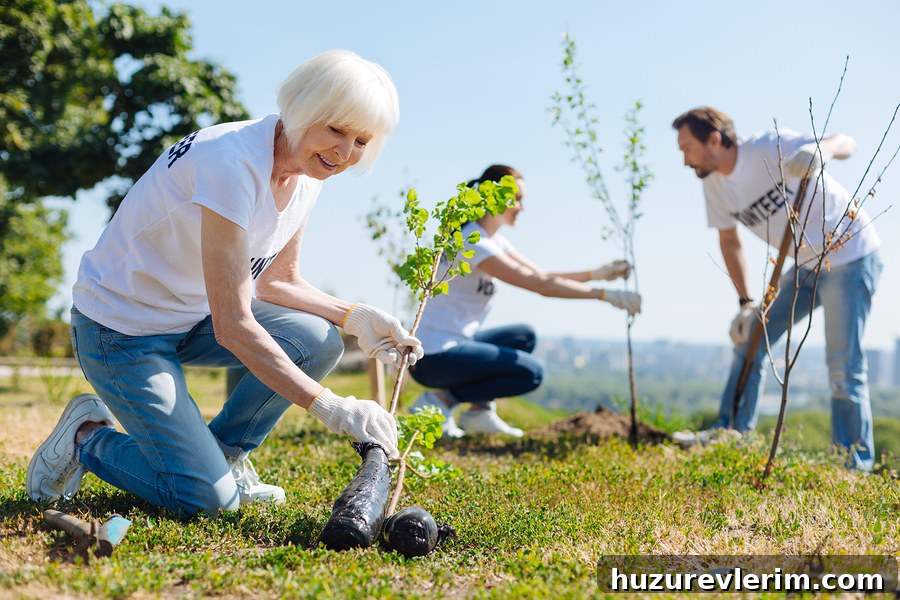
Consider Aldersgate, a CCRC near Charlotte, North Carolina, where residents partnered with a nonprofit to create a 6.7-acre working farm on campus. The farm supplies fresh, affordable produce like cucumbers, kale, spinach and tomatoes to nearby neighborhoods and serves as a community hub.
Aldersgate residents volunteer at the farm in many roles. The site hosts monthly farm-to-table dinners open to the community, offers mobile kitchen cooking demonstrations, and functions as a hands-on learning lab for local schools so children can learn where food comes from.
Both the Orchard Ridge and Aldersgate examples show how retirement community residents can use their skills and experience to make meaningful contributions to their wider communities.
>> Related: Everyone Wins: Why Society Must Tap into Seniors’ Experience & Wisdom
Reaping the rewards
There’s a persistent but mistaken belief that people lose their value to society after retirement or when health changes arise. That myth can become a self-fulfilling prophecy as seniors withdraw and become isolated. The reality is the opposite: older adults possess skills, knowledge and compassion that remain valuable, and they can continue contributing when opportunities are available.
Residents of CCRCs demonstrate this daily. Whether crocheting mats for those without shelter, growing produce for neighbors, or volunteering in other ways, these seniors are actively improving their communities. Their efforts are often supported by friends and staff within their communities, which helps projects thrive.
Service projects benefit recipients and the volunteers themselves. Participating seniors form friendships, stay mentally and physically engaged, and find renewed purpose. The sense of contribution can be life-affirming and deeply rewarding for everyone involved.