

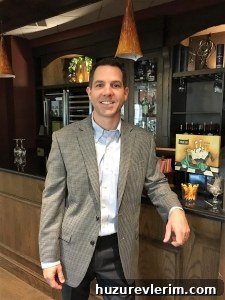
 I recently visited a beautiful continuing care retirement community (CCRC), also known as a life plan community, in Tulsa, Oklahoma, and was struck by how inviting it felt. After an overnight stay in a comfortable guest suite, I took an early-morning jog along a trail that winded through the grounds, crossed several creeks, and skirted a peaceful fishing pond. Morning mist drifted over the water as the sun rose. The community featured attractive free-standing independent living cottages and a clubhouse with a cozy pub (where I am standing in the photo to the right), a library, and a game room with a pool table. In that setting it was easy to ask: why wouldn’t more people want to live here?
On the plane into Tulsa I sat next to a retired couple who recognized the community and told me they’d visited several times and receive its mailings. They praised the place and said they would likely consider it in the future—yet added they were “not ready yet.” In other words, they didn’t feel old enough to move into a retirement community. That exchange raised a larger question: can CCRCs appeal to younger retirees, and if so, what would that require?
CCRCs and younger retirees: time for a paradigm shift?
Sitting in the community café waiting for breakfast, I thought about why many CCRCs struggle to attract younger residents. This challenge isn’t unique to CCRCs, but it affects them more because of their business model and the way they present themselves. It seems the industry could benefit from more creative thinking and innovation—not only in physical design but in how it markets the lifestyle that a CCRC offers.
Consider how planned activities are presented. Well-intended schedules of group activities can unintentionally signal that residents need assistance to stay active, reinforcing the stereotype of a place for the frail. When people picture senior activities, they too often imagine assisted living or nursing-home programs. What if communities reframed the message to emphasize resident autonomy? Imagine a staff response like:
“Our residents organize and lead the activities they want, the same way they would anywhere else. We provide concierge services to support their plans, but we don’t dictate their days.”
The model of scheduled group transportation can send a similar message. Many upcoming retirees picture themselves as still active drivers—some even shown in ads riding motorcycles or surfing—so a shuttle bus may feel like a sign of being “too old.” That said, transportation options remain important for residents who eventually stop driving. Instead of fixed vans, communities could experiment with modern alternatives that match younger retirees’ expectations: ride-hailing partnerships, flexible volunteer-driver programs, or on-demand services tailored to seniors. Several pilot programs with services like Lyft and specialized providers show promise for improving mobility without the stigma of a retirement shuttle.
>> Learn more about CCRC and related topics
Another factor may be the visible absence of younger people on campus. If prospective residents rarely see anyone younger than the staff, they may conclude the community lacks diversity of age and activity. Some communities already run intergenerational programs—on-site tutoring, collaborations with youth groups, or shared projects—that bring young people and older adults together to mutual benefit. But there are other inventive options that can reshape public perception: opening certain amenities to local professionals and families, hosting community fitness groups on trails and green spaces, or offering co-working hours in conference rooms. These moves can increase daily vibrancy and generate positive local exposure while remaining low-cost.
>> Related: Common Ground: Intergenerational Programs Benefit Both Children & Older Adults
To attract younger retirees, it helps to focus on what they value. Early retirees often prioritize travel, experiences, fitness, learning, and social engagement. CCRCs could partner with travel providers for resident travel benefits, create exclusive concert or cultural series, or develop resident clubs around hobbies like cooking, wine tasting, and continuing education. Many such offerings can be introduced at little expense or structured as member-funded programs. Highlighting these lifestyle options can make communities more appealing to people who think retirement living means giving up the activities they enjoy.
Website first impressions
Websites are often the first impression a community makes, and many CCRC sites emphasize healthcare—photos of caregivers, clinical awards, or claims about nursing rankings. While quality healthcare is essential, foregrounding it can unintentionally position the community as a nursing facility, which deters younger prospects. Instead, websites should feature authentic images of residents engaged in active, modern pursuits: cooking classes, fitness sessions, small-group lectures, art, travel outings, and social events led by residents. Real photos of actual residents (not generic stock images) doing things active retirees enjoy will better convey the lifestyle many are seeking.
New ideas for a new generation of prospects
The examples above are starting points rather than prescriptive solutions. The larger point is that CCRCs should challenge conventional thinking and experiment with new ways to sell the lifestyle they offer. By reframing activities to emphasize resident choice, modernizing transportation options, creating more intergenerational and community connections, and showcasing vibrant, resident-led experiences on their websites, communities can broaden their appeal and attract a younger generation of retirees who want freedom, engagement, and opportunity—not a place that feels like a nursing home.