
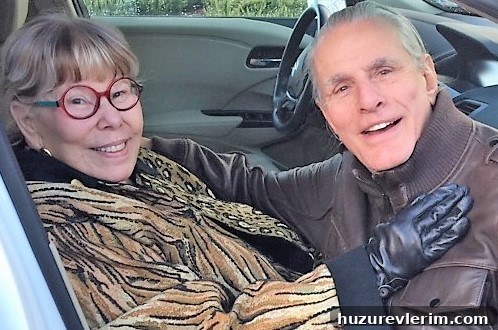
In last week’s blog post, I discussed why every retiree should at least consider the option of moving to a retirement community. It won’t be the right choice for everyone, but it’s worth approaching with an open mind and weighing the pros and cons against other living arrangements. Preconceptions about life in a retirement community are often inaccurate. Any move requires adjustment, but many people find their concerns fade after settling into a supportive, active community.
>> Related: Why Every Retiree Should Consider a Retirement Community
A new CCRC resident’s story
A few years ago I corresponded with Dr. Harvey W. Austin, a respected cosmetic surgeon who, with his wife Arleen, was enjoying retirement in Fort Lauderdale, Florida. Dr. Austin had read my book, What’s the Deal with Retirement Communities?, and we exchanged several emails about senior living and the decision to move to a retirement community.
Dr. Austin is also an author. His book Elders Rock! Don’t Just Get Older: Become an Elder explores how seniors can embrace a mindset that allows them to thrive during later years. He defines “Elder” as a stage of life rather than a specific age and argues that elderhood can be full of aliveness, joy, and creativity. His perspective offers a thoughtful, positive take on aging and the possibilities it brings.
Recently I received an update from Dr. Austin that felt especially timely after my blog post encouraging retirees to explore retirement community options. He and Arleen had just moved to StoneRidge, a continuing care retirement community (CCRC or life plan community) in Mystic, Connecticut. I found his account inspiring and, with his permission, I’m sharing his observations about the transition.
Dr. Austin’s email
We’re settling in.
New scenery. New people. A new stage of life—the last third of the last third. I am 82 and Arleen, 79.
To our new life in Mystic we have moved. At an age that some might call “advanced,” we traveled from Medford in the Northwest—2,500 miles—to the land of my roots in New England. Arleen, on the other hand, is a California girl by birth.
Being here feels right.
Partly because we consider ourselves Elders. We’re not simply older adults trying to act young. We see elderhood as a distinct and meaningful stage of life. Both of us have long embraced that identity. I wrote Elders Rock! to explain the difference between merely getting older and becoming an Elder.
My personal motto as an Elder is: “I don’t mind whatever happens.” Arleen’s motto is: “Life begins at the edge of your comfort zone.”
I like Alan Watts’s observation that as people age their world can shrink; he remarked that it can become like a tube focused only on intake and output. That’s a bleak image and not how we want to live. We purposefully avoid that cramped thinking.
There’s so much to do here and so much to think about that becoming that “tube” would take real effort.
One benefit of moving into a retirement community is how your social identity shifts. When we lived in a suburban house with a yard and a car, we were largely isolated from neighbors and our primary social unit was the couple. Moving into a large community—our new home has about 300 residents—changes that. We have our own apartment, but we also dine together, attend events, join groups and committees, use the pool, and go to talks and movies in the auditorium. Our sense of belonging is expanding beyond the couple to something more like “community,” a modern echo of the tribe as the basic social unit. It feels right.
At StoneRidge, people genuinely seem happy. A few may sit alone sometimes, and that’s their choice, but most smile and laugh together—residents and staff alike—regardless of mobility or age. There’s an energy here that’s easy to notice, something residents often struggle to put into words. It’s reminiscent of the old TV show Cheers, where “everybody knows your name.” Even before we arrived, staff and residents knew us by name, and many say they experienced the same warm welcome when they moved in.
Many residents are older adults and several are what I would call Elders, fully engaged and enjoying life. It’s been a joy to find a place where people are happy and actively involved. We feel fortunate to have found this community.
———
A comfortable move, a natural fit
Dr. Austin’s email offers an authentic look at what it’s like to move into a CCRC or other retirement community. It’s common for prospective residents to hesitate about whether to move and when is the right time. The Austins likely weighed those questions before relocating.
As his account shows, they already feel at home at StoneRidge, welcomed into a large, supportive community while having access to a full continuum of care services should they ever need them. The combination of social connection, purpose, and available care options makes such communities a strong option for many older adults. As Dr. Austin put it simply: “Being here feels right.”
I’m glad the Austins found their new “tribe” and that their transition has been positive. A thoughtful move to a retirement community can bring renewed connection, meaningful activities, and peace of mind—benefits worth exploring when planning the next chapter of life.