
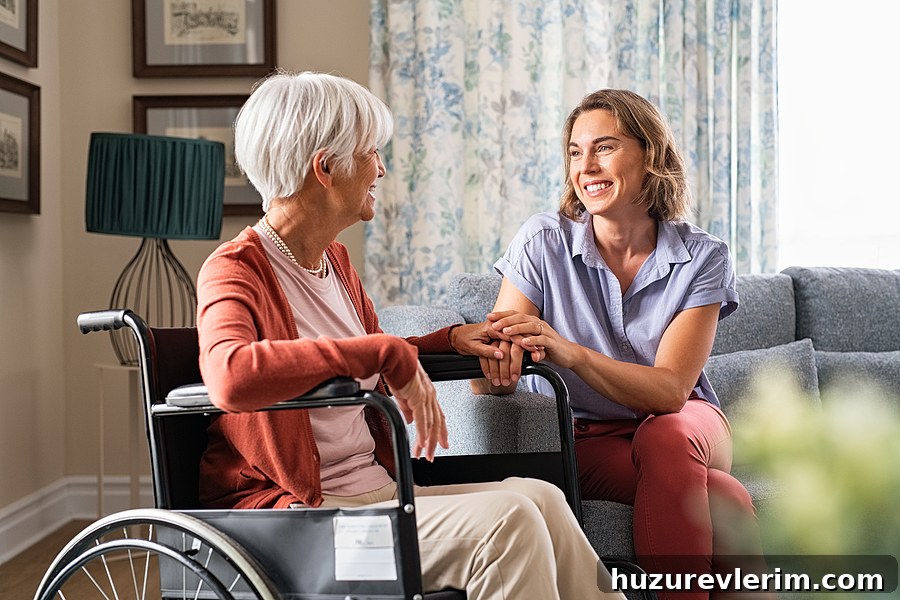
Assisted living (AL) is the largest provider of residential long-term care in the United States, and the resident population continues to grow as Baby Boomers age and need varying levels of support. A recent study from the Center for Health Services Research at the University of North Carolina (UNC) at Chapel Hill explored a key question: what medical and mental health services should assisted living communities offer to meet residents’ needs?
>> Related: What are the Odds of Needing Assisted Living?
What is assisted living?
According to the latest figures from the Centers for Disease Control and Prevention (CDC), there are nearly 29,000 assisted living communities in the U.S., housing more than 900,000 residents.
Assisted living communities typically serve individuals who need help with activities of daily living (ADLs) — such as bathing, toileting, dressing, and eating — and/or instrumental activities of daily living (IADLs) — such as meal preparation, transportation, housekeeping, or medication management.
These communities provide room and board, at least two meals a day, around-the-clock supervision, and personal care assistance. They may also provide some healthcare services, but they are not designed to deliver continuous, long-term skilled nursing care the way nursing homes or skilled nursing facilities do. Assisted living prioritizes a residential, home-like environment rather than a medical setting.
Assisted living blends care, companionship, independence, privacy, and safety. Communities aim to deliver person-centered care, tailoring services to each resident’s individual needs and preferences.
>> Related: What’s the Difference Between Assisted Living and Nursing Care?
Are assisted living services meeting residents’ comprehensive care needs?
Although nearly all assisted living communities provide help with ADLs and IADLs, data from the National Center for Assisted Living (NCAL), the advocacy arm of the American Health Care Association, show wide variation in the medical and mental health services offered. For example:
- 4 percent of assisted living communities provide therapy services (physical, occupational, or speech)
- 7 percent offer hospice care
- 1 percent provide skilled nursing care
- 0 percent report offering mental health or counseling services
- 1 percent employ social work services
Meanwhile, today’s assisted living resident tends to be older and presents with higher medical acuity and more complex needs. The UNC report highlights several important trends:
- 53 percent of assisted living residents are 85 years old or older (compared with 42 percent of nursing home residents).
- More than half of residents need assistance with mobility.
- Most residents have chronic conditions such as hypertension, arthritis, cognitive impairment, or depression. At least one-third have conditions like osteoporosis, chronic obstructive pulmonary disease, diabetes, heart disease, or chronic kidney disease.
- The average stay in an assisted living community is about 22 months, and approximately 60 percent of residents eventually transition to a nursing home for a higher level of around-the-clock skilled nursing care.
The UNC researchers called attention to potential gaps between resident needs and available services: “As residents’ acuity has increased, there has been growing concern about their medical and mental health needs, in part because most regulations do not require nursing or medical staff; more so, fewer than 7 percent of the 28,900 AL communities are on the same campus as a nursing home, with presumed access to nursing home staff. Concerns are numerous, among them under-prescribing or over-prescribing medication, insufficient communication when problems arise, and regulations that restrict nursing services.”
>> Related: The Cost of Assisted Living- What You Need to Know
The experts weigh in on assisted living care needs
To address these concerns, UNC convened a national panel of 19 experts in medical, nursing, and mental health care for older adults, dementia care specialists, and professionals with experience in assisted living and long-term care management, regulation, advocacy, and education. The panel aimed to identify practical, evidence-informed recommendations to guide assisted living communities on which medical and mental health services to provide.
The expert panel produced 43 pragmatic recommendations. Highlights across five focus areas included:
- Staff and staff training
- Training all staff in person-centered care
- Establishing appropriate care worker-to-resident ratios
- Nursing and related services
- Providing routine toenail care on-site
- Resident assessment and care planning
- Including the resident in assessment and care planning discussions
- Policies and practices
- Having clear policies and procedures to manage aggression and other behaviors
- Notifying a responsible party when a resident has an emergency department visit
- Discussing and documenting advance directives for all residents
- Medical and mental health clinicians and care
- Ensuring off-site medical or mental health visits generate post-visit notes that are shared with the community
You can view the full set of the expert panel’s recommendations in the UNC report.
>> Related: A Low-Wage Paradox for Assisted Living & LTC Caregivers
A holistic care plan for assisted living residents
Assisted living is an attractive option for people who need help with daily tasks but do not require continuous skilled nursing care. As more seniors choose assisted living, the sector’s workforce shortages and the wide range of resident needs have come into sharper focus. Some residents require assistance with only a few ADLs or IADLs, while others approach the level of need that requires a move to a skilled nursing facility.
Although the assisted living model emphasizes individualized care, medical and mental health services are often limited or inconsistent. The UNC study and its expert panel emphasize that communities should take a more holistic, person-centered approach—assessing and addressing medical and mental health needs alongside ADLs and IADLs to ensure residents receive comprehensive, coordinated care.