You may have seen recent coverage about the rise in homelessness across the United States. One of the fastest-growing groups affected is older adults. Multiple factors are driving this trend. As a nation, what can we do to ensure older people live with dignity, security, and safe housing?
In December of last year, the U.S. Department of Housing and Urban Development (HUD) published the 2023 Annual Homelessness Assessment Report (AHAR) to Congress. Part I of that report provides a point-in-time (PIT) estimate of how many people experienced homelessness on a single night in late January.
Based on the January count, more than 653,000 people — roughly 20 per 10,000 residents — were experiencing homelessness. About 60% of those were in sheltered settings such as emergency shelters, transitional housing, or safe havens. The remaining 40% were unsheltered, living in places not meant for human habitation.
The HUD findings show a 12% rise in homelessness from 2022 to 2023 — an increase of about 70,650 people. The 2023 PIT count represents the highest single-night total recorded since AHAR reporting began in 2007, signaling a growing national crisis.
An increase in homeless older adults
The report also examined demographic patterns and highlighted a disturbing rise in homelessness among older adults. More than one in five people counted as homeless on that January night were age 55 or older. Specifically, over 98,000 people were between ages 55 and 64, and nearly 39,700 were 65 or older. Nearly half (46%) of adults age 55 and older were unsheltered, living in places not meant for human habitation.
Breaking those numbers down, 15.1% of the homeless population (about 98,400 people) were ages 55 to 64, and another 6% (about 39,700 people) were 65 and older. Older adults comprised 18.8% of sheltered homeless people and nearly a quarter (24.8%) of those who were unsheltered. These figures underscore the particular vulnerability of older adults to housing instability.
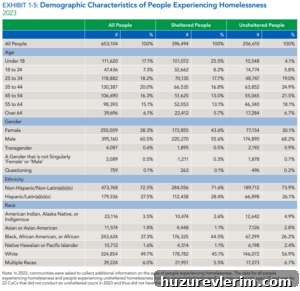
Source: 2023 Annual Homelessness Assessment Report (AHAR) to Congress
More homeless Veterans
The HUD report also flagged a concerning increase in Veteran homelessness. Over 35,570 Veterans were experiencing homelessness in 2023 — about 22 per 10,000 Veterans nationwide. That represents a 7% increase from 2022, or 2,445 additional Veterans. The rise included a 14% jump in unsheltered Veterans (1,943 more people) and a 3% rise in sheltered Veterans (502 more people).
Geographically, more than 70% of unsheltered homeless Veterans were concentrated in five states:
- California (48%)
- Florida (7%)
- Washington (6%)
- Oregon (6%)
- Texas (5%)
New York and Wisconsin reported the fewest unsheltered Veterans at 3% each. Despite the recent increase, HUD noted a longer-term improvement: Veteran homelessness in 2023 remained 52% lower than the baseline year of 2009.
Factors driving the increase
Several interrelated factors are contributing to rising homelessness overall and the specific surge among older adults:
- Lack of affordable housing: In many metropolitan areas, supply of affordable units has not kept pace with demand, leaving older adults on fixed incomes especially vulnerable.
- Rising housing costs and interest rates: Higher rents, home prices, and mortgage interest rates have strained budgets and pushed some older households into homelessness.
- End of pandemic-era supports: Temporary relief funds from the American Rescue Plan Act (ARPA) and federal eviction moratoria have expired, removing protections that once kept people housed.
- Increased competition for lower-cost housing: The arrival of migrants and asylum-seekers has increased demand for lower-cost units, intensifying competition with long-standing residents who rely on affordable options.
- Climate-related disasters: More frequent and severe weather events — hurricanes, flooding, wildfires, and extreme storms — have displaced people, with states that have larger older populations particularly affected.
- Substance use and addiction: Alcohol and powerful drugs such as prescription opioids, methamphetamine, and fentanyl contribute to homelessness. Studies also show substance use disorder affects Medicare beneficiaries, including older adults.
Addressing homelessness among older adults
Tackling homelessness requires practical, coordinated solutions that prioritize the most vulnerable: older adults, children, and Veterans. HUD’s 2023 report did note a 7% increase in the national inventory of beds for people experiencing homelessness from 2022 to 2023, which is a positive step. Still, that expanded capacity did not keep pace with the 12% rise in people experiencing homelessness during the same period.
Policy options to consider include expanding subsidized senior housing, developing permanent voucher programs tied to supportive services, and investing in prevention strategies that keep older adults in their homes. Programs that combine stable housing with access to health care, behavioral health treatment, and case management tend to produce better long-term outcomes.
The senior living industry, policymakers, and community organizations should pursue innovative, cost-effective approaches to reduce homelessness among older adults. Ensuring stable housing for older Americans is not only a practical necessity but a moral obligation: older adults deserve safe, secure homes where they can live with dignity and peace of mind.