
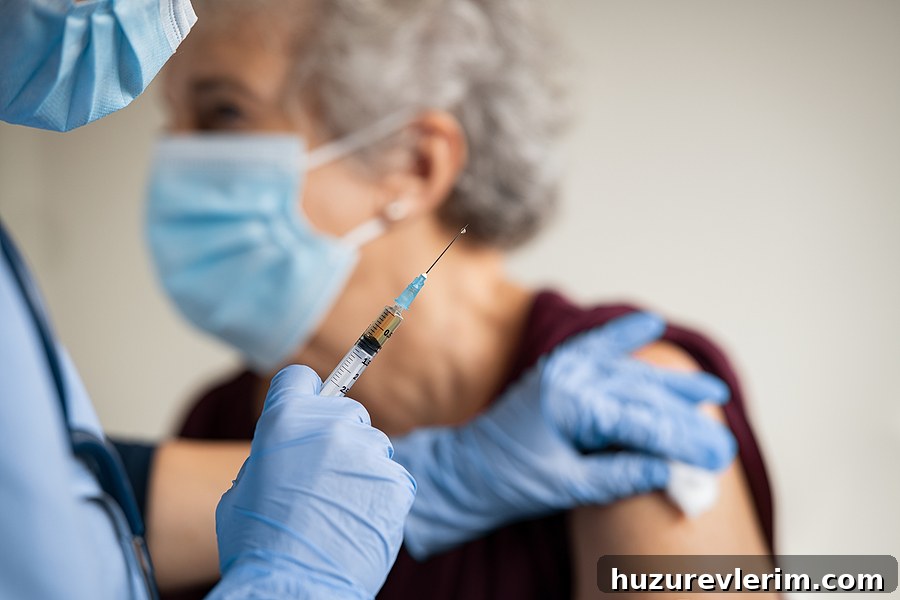
Our nation has endured a painful nine months as COVID-19 infected millions and claimed hundreds of thousands of lives. So it was an emotional moment when we watched the first Americans receive the long-awaited COVID-19 vaccine.
As I wrote recently, it is welcome that healthcare workers and residents of long-term care (LTC) facilities are prioritized for vaccination. These groups have been disproportionately affected by infections, and LTC residents have represented a tragically large share of deaths.
But what about senior living residents who live independently, such as those in continuing care retirement communities (CCRCs or life plan communities)? Will they receive priority alongside residents of assisted living and nursing homes? The answer is less clear.
>> Related: A Look at Priorities for Long-Term Care Vaccination
A state-by-state decision
The CDC released guidance over the weekend on how to prioritize vaccine recipients. However, the ultimate decisions about rollout and the order in which groups receive the vaccine rest with individual states, and some states have communicated their plans more clearly than others.
For example, in Florida the state health department, working with pharmacies like Walgreens and CVS, is sending “strike teams” into LTC facilities to vaccinate nursing home and assisted living residents who face the highest risk of severe disease.
Florida’s plan, however, does not clearly specify the timeline for vaccinating seniors who live independently on the same campus as LTC residents, as is the case in many CCRCs.
Pennsylvania’s Department of Health has outlined detailed priority tiers, though the exact timing remains uncertain. In that state, healthcare providers and LTC residents are in “Phase 1A” and will receive the first doses. Seniors living in independent living communities, those age 65 and older, and people with high-risk health conditions fall into “Phase 1B,” but vaccine supply and distribution will determine when this group is immunized.
In Kansas, state guidance names healthcare workers and LTC residents as top priorities, along with several other high-risk groups. Partnering with Walgreens and CVS, Kansas is prioritizing residents of LTC facilities, people age 65 and older, and those at increased risk of severe illness due to underlying conditions. Notably, Kansas explicitly includes residents of CCRCs in the group eligible for initial vaccines, offering clearer direction for independent living residents on those campuses.
>> Related: A Look at State Rankings for Long-Term Care Services
The CCRC “gray area” for the COVID-19 vaccine
These examples show how states differ in planning who gets vaccinated and when. This is a massive undertaking with complex logistical and ethical considerations, and some decisions may overlook the often-gray line between independent living and assisted living within CCRCs.
One independent living resident in a CCRC may be active and healthy, while another may be nearly dependent on long-term care, perhaps receiving in-home help from a caregiver. Does living in an independent unit exclude a frail resident from early vaccination while a similarly vulnerable person in assisted living is prioritized? In practice, vaccination priority in such cases is not always clear-cut.
>> Related: How the Pandemic Has Impacted Thoughts About Senior Living
Independent seniors eager for their shot
In many states, there is no definitive timeline for when independent living residents of CCRCs can receive the COVID-19 vaccine, yet many are eager to be vaccinated.
At its core, this issue hinges on whether retirement communities are receiving clear guidance from their states and whether management is effectively communicating plans to residents. Some state health departments have articulated rollout plans more clearly than others, and federal-to-state communication about vaccine quantities and timing has sometimes been unclear. As a result, some states are not yet positioned to say when independent-living CCRC residents will be vaccinated.
The good news is that vaccines are arriving, and with two COVID-19 vaccines authorized for emergency use by the FDA, there is reason for cautious optimism that we are moving toward the end of this difficult chapter.