

This week I read about human motivation and decision-making. I’m not a psychologist, but I found it interesting to consider what prompts people to move to a continuing care retirement community (CCRC) or another type of senior living community.
I was specifically looking at Abraham Maslow, often called a founder of humanistic psychology. Popularized in the 1960s, humanistic psychology focuses on the individual and emphasizes personal growth and present-day experience rather than past pathology.
Maslow developed his approach in part as a response to Freudian psychoanalysis and Skinnerian behaviorism, which focused more on past experiences and observable behaviors than on the person’s present needs and aspirations.
In 1943 Maslow published “A Theory of Human Motivation,” where he introduced what became known as Maslow’s Hierarchy of Needs.
Maslow’s Hierarchy of Needs
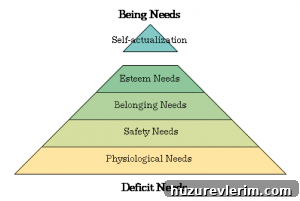 Maslow’s model describes five levels of human needs arranged like a pyramid.
- The base of the pyramid is physiological needs — essentials such as air, water, food, sleep, shelter, clothing, and basic bodily needs.
- The next level is safety needs — protection from danger, good health, and financial security.
- Above that are love and belonging needs — relationships, family, friendship, and community connection.
- The next layer is esteem needs — feeling respected, recognized, and valued, plus self-esteem and autonomy.
- At the top is self-actualization — realizing one’s full potential and pursuing meaningful goals.
>> Related: The Key Difference Between Social Isolation & Loneliness
What motivates people’s decisions
Maslow argued that the lower four levels — which he called deficit needs or “d-needs” — must be largely satisfied before a person can pursue the highest level, self-actualization, which he labeled “being needs” or “b-needs.”
In other words, people are unlikely to focus on personal growth and higher aspirations until their basic needs are met. Unmet deficit needs tend to generate anxiety and tension, occupying mental and emotional energy that might otherwise go toward self-improvement.
Maslow also described meta-motivation: the drive of individuals who move beyond deficit needs and consistently pursue growth, creativity, and self-fulfillment. Those who are meta-motivated are guided by b-needs rather than d-needs.
>> Related: Pre-Crisis vs. Post-Crisis Planning: Confronting Life’s Unknowns
The psychology of a senior living decision
How does this relate to choosing senior living? The connection is strong.
In our “I’m Not Ready Yet” series, many reasons emerged for delaying a move to a CCRC or other community: emotional resistance to downsizing, worries about affordability and running out of money, or simply feeling “not old enough” to move.
Those hesitations reflect different layers of Maslow’s hierarchy. Moving to a senior living community stirs practical and emotional concerns tied to safety, belonging, and esteem as well as financial security.
One whitepaper from Morrison Living surfaced for me as particularly relevant. It highlights how initial attractions to a community — such as continuum of care, less home maintenance, and greater security — often differ from what residents later say most satisfies them: opportunities for personal growth, friendship, and the freedom that comes from stress-free time.
>> Related: For Senior Living Decisions, Are You a Planner, Procrastinator, or Crasher?
The motivations of senior living residents
Research on older cohorts confirms these themes. Morrison’s focus groups with members of the Silent Generation explored beliefs, priorities, and motivations, and a later ProMatura study linked resident satisfaction to the quality of daily life. Activities in culture, music, arts and crafts, and lifelong learning were especially important — all forms of personal growth that align with self-actualization.
The Morrison study noted that many residents frequently say, “I should have moved years ago,” reflecting satisfaction that goes beyond practical conveniences to include social connection, meaningful activities, and a sense of renewed freedom.
>> Related: In a Good Place: Enjoying Retirement in a CCRC
Stress-free living
When you combine the findings from Morrison and ProMatura with Maslow’s framework, the psychology behind senior living choices becomes clearer.
By moving to a CCRC, seniors often secure their deficit needs: reliable shelter, health and safety supports, social connections, and financial planning that reduces uncertainty. With those foundational needs addressed, residents can shift energy toward b-needs like creativity, learning, and personal fulfillment.
That “abundance of stress-free time” the Morrison paper mentions enables residents to pursue hobbies, volunteer work, travel, friendships, or new skills — pursuits Maslow described as meta-motivations of self-actualizing individuals.
>> Related: Rediscovering Your Life’s Purpose Later in Retirement
Reaching your full potential
Choosing a senior living community can remove many daily burdens: home maintenance, meal planning, safety concerns, and the worry of future care needs. CCRCs, with a full continuum of care, add an extra layer of reassurance about future health needs.
Peace of mind, security, social opportunities, and structured activities contribute directly to quality of life and resident satisfaction. More importantly, meeting those basic needs frees residents to focus on growth, creativity, and personal purpose — the highest tier of Maslow’s pyramid.
What might you pursue with an abundance of stress-free time: a creative project, volunteering, travel, or learning something new? For many, a CCRC provides the environment and resources to explore those possibilities and work toward their fullest potential.