
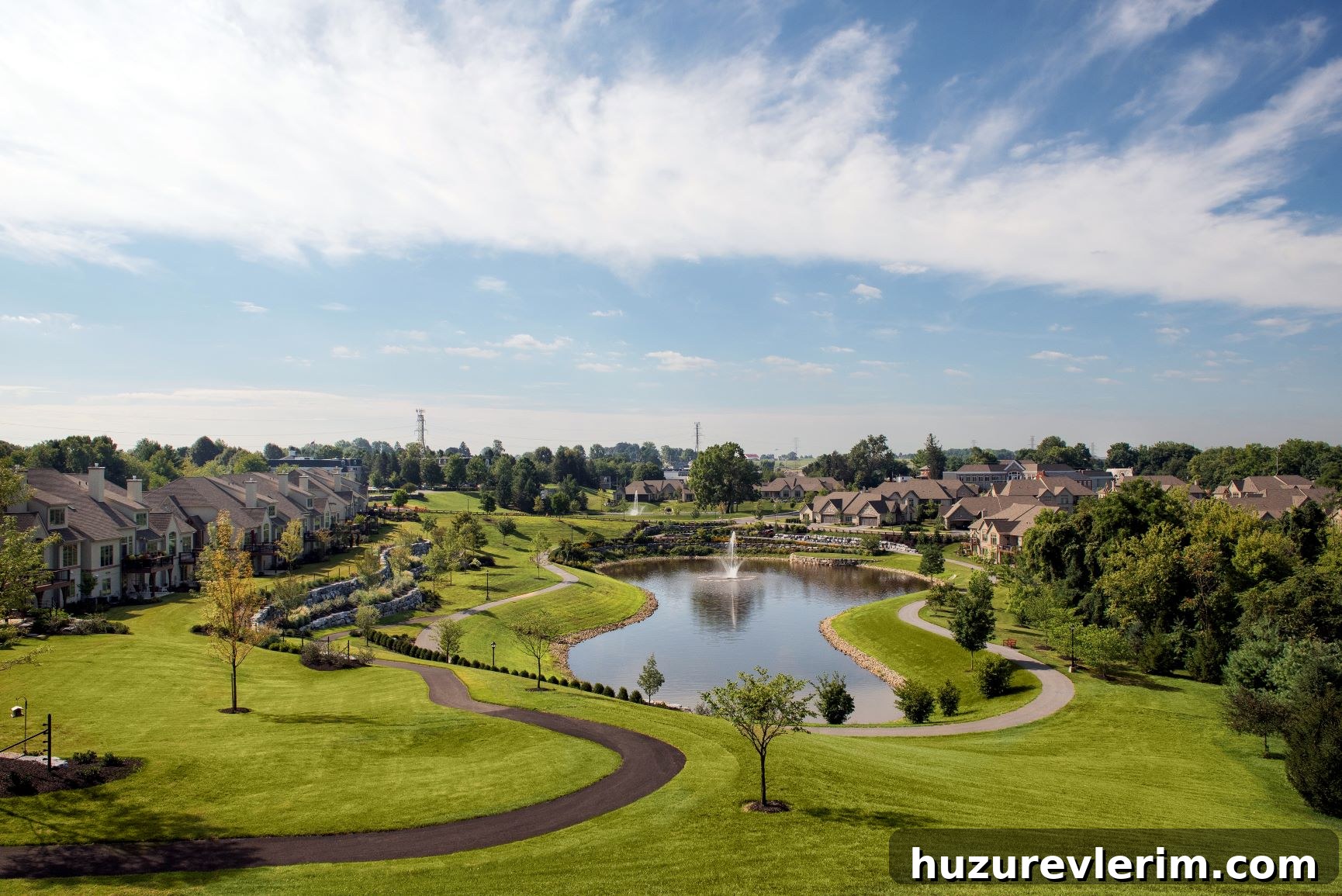
Pictured: Townhomes at Providence Park on The Manor campus of Willow Valley Communities
(photo credit: Willow Valley Communities)
The COVID-19 pandemic has been particularly dangerous for older adults. In Pennsylvania, for example, more than half of the state’s early COVID-19 deaths occurred among nursing home residents. That stark reality has prompted many senior living communities to adopt strict protective measures. While outbreaks have affected some communities, others that acted quickly and comprehensively have had much better outcomes. Willow Valley Communities is one such example.
Willow Valley Communities (WVC) is a continuing care retirement community (CCRC) located in Willow Street, Pennsylvania, between Lancaster and Philadelphia. The community consists of two adjacent campuses — The Manor and The Lakes — offering a range of independent living options, including apartments, villas, and townhomes, plus onsite healthcare for residents who need higher levels of care. The combined 210-acre property features courtyards, walking paths, ponds, and a natural wetlands area.
Because many people with COVID-19 show no symptoms, prevention and early intervention are essential. WVC moved quickly to reduce risk and communicate clearly with residents, families, staff, and the public. They created a dedicated COVID-19 page with regular updates and educational resources, and established a set of measures designed to prevent the virus from entering and spreading through the community. Key steps they implemented over the past weeks include the following:
COVID-19 response team: WVC formed a specialized response team that includes leadership, the medical director, and members of the infection control committee, with guidance from a nearby hospital. The team meets daily to review policies, best practices, and proactive steps to protect residents and staff.
Resident and staff education: Management began collecting information from residents and employees about recent travel, contacts with travelers, and any symptoms. They increased education on social distancing and infection prevention, posted handwashing instructions throughout the community, and provided hand sanitizer in dining areas. Staff received refreshed training on proper handwashing, glove use, and personal protective equipment.
Increased cleaning: Housekeeping frequency was increased in all public areas. Buses and vans are wiped down daily, communal dining utensils were removed, fitness areas are cleaned more often, and high-touch surfaces receive extra attention.
Restricting guests: Visitor screening began early, and outside guests were eventually prohibited. Visits are restricted even for spouses of residents in assisted living, memory care, and nursing units to protect the most vulnerable residents.
24/7 non-resident screenings: From March 23, all non-residents — including employees, vendors, and contractors — are screened at one of two 24/7 checkpoints before entering any building. Screenings include health questions and a temperature check.
Limiting residents’ travel off-campus: Residents were initially encouraged to limit travel. Later, anyone who left campus under specified circumstances was required to self-isolate for 14 days upon return. Residents who prefer to avoid in-person voting are encouraged to use absentee ballots.
Resident screenings on return: A strict re-entry screening policy routes returning vehicles through a checkpoint where masked staff take forehead temperatures with infrared thermometers and ask screening questions of drivers and passengers.
Masks for all residents: WVC distributed cloth masks for residents to wear when outside their homes. Many of these masks were made by the community’s quilters’ group, which produced over 500 masks.
Eliminating group activities: All group events and activities have been canceled. Residents are reminded not to gather or dine in person with neighbors to limit exposure.
Dining and grocery services: Sit-down dining was replaced with to-go orders and then transitioned to full meal delivery for all residents. Grocery delivery services are also provided to minimize trips off campus.
Communications: WVC expanded its communication channels, using the COVID-19 website, the community mobile app, and a regular communique sent to residents with news and policy updates. The community also launched a daily live broadcast on the campus TV station to share data, updates, and procedural changes.
Transparency: Residents and family members can submit anonymous questions online. Those questions are addressed during the daily TV Q&A, and a public list of questions and answers is maintained on the COVID-19 page.
Team Member Emergency Fund: Residents requested creation of a relief fund to support staff facing financial hardship from COVID-19. The fund has received substantial contributions and will distribute relief payments to eligible employees after a review process managed by Human Resources and a virtual committee.
A measure of prevention success
These measures, while disruptive, are focused squarely on protecting health and saving lives. The results so far are encouraging: at the time of writing, only one resident and one employee have tested positive for COVID-19. The resident was isolated immediately and contact tracing was performed. The employee had not been at work during the contagious period, and contact tracing found no close contacts among residents or staff. WVC’s proactive, transparent, and thorough approach offers a useful model for other CCRCs seeking to prevent outbreaks on their campuses.
This remains a difficult time for communities across the country, but organizations like Willow Valley Communities demonstrate how decisive action, clear communication, and caring support for staff and residents can reduce risk and preserve wellbeing.